
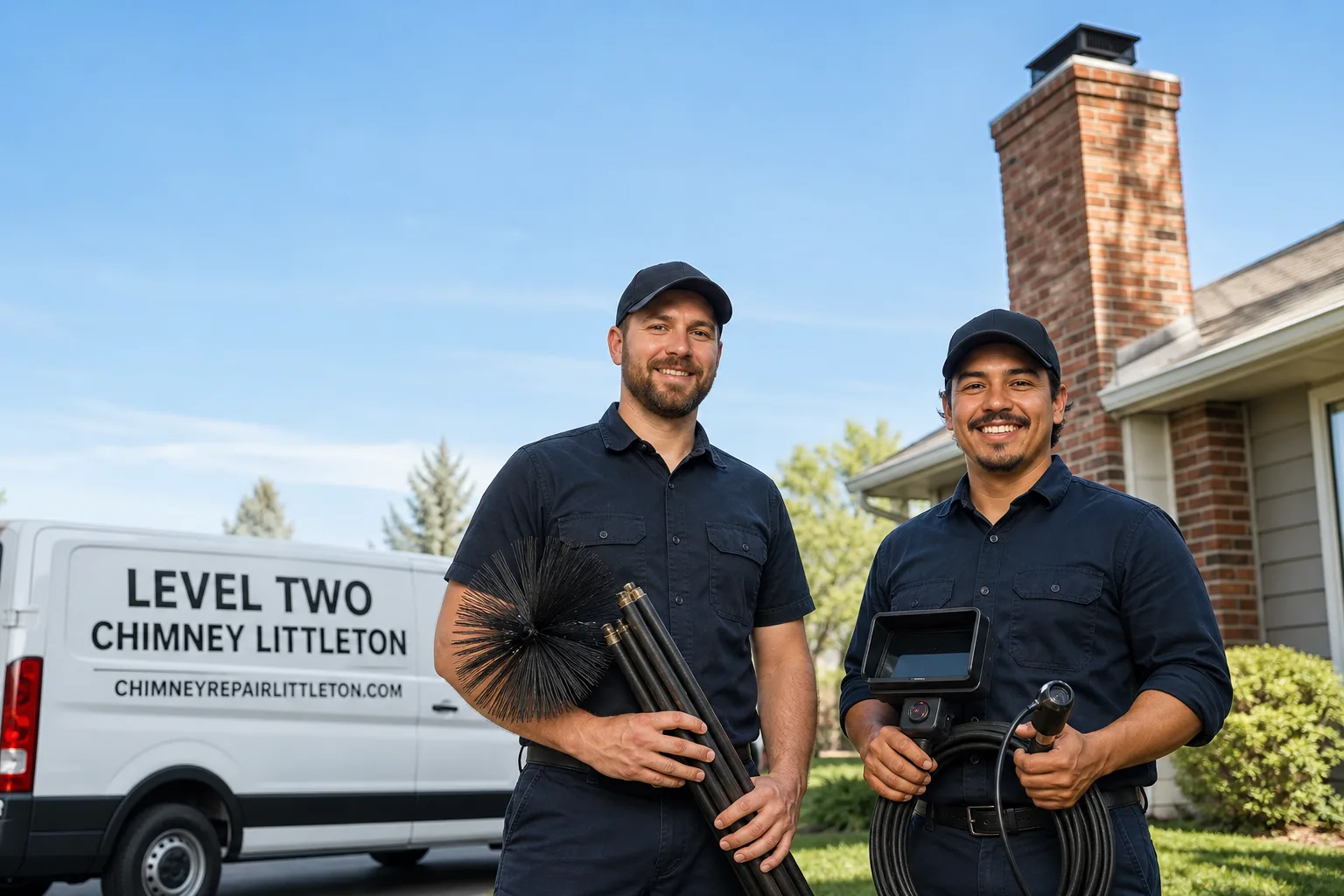
Level 1 sweep and inspection to the NFPA 211 annual standard - flue, crown, cap, and flashing checked and photographed
Chimney sweep logs do not sweep chimneys. They loosen some creosote - which then falls where a brush and vacuum still have to collect it.
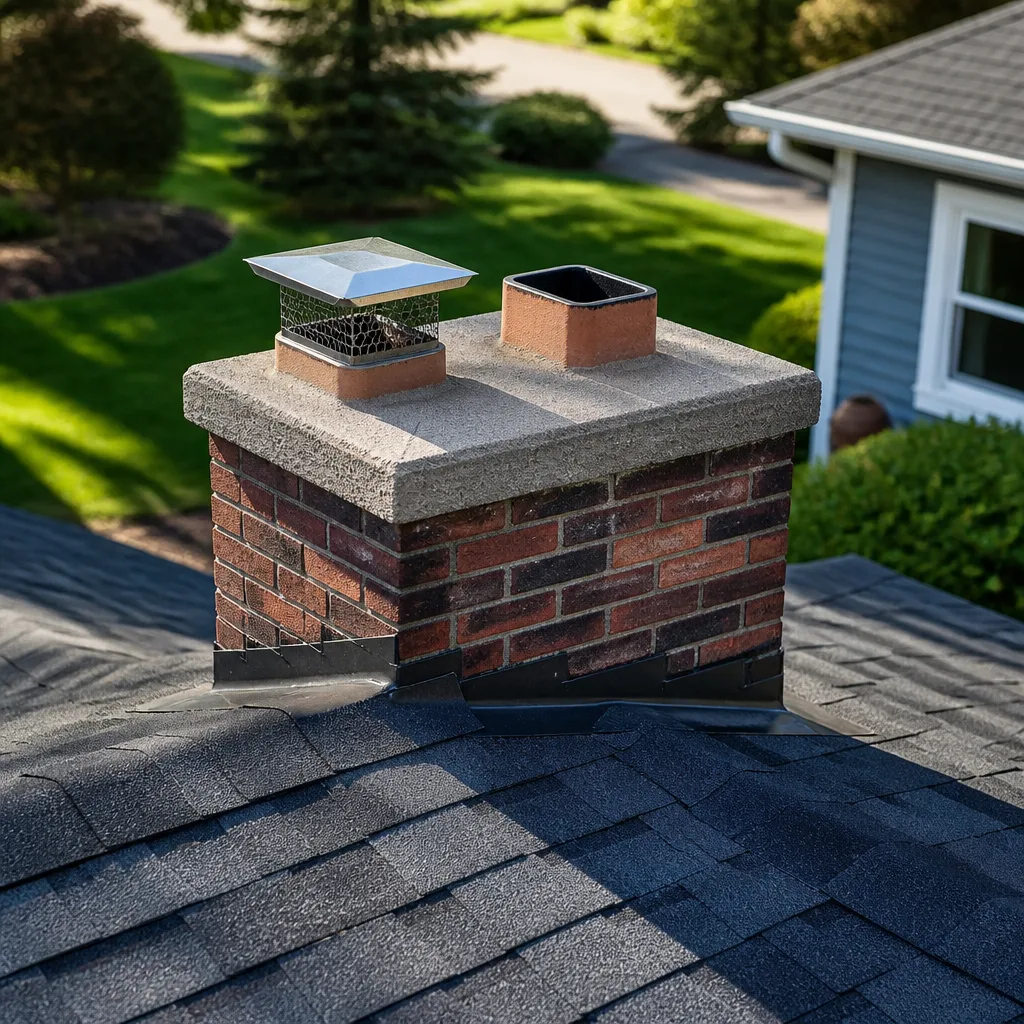
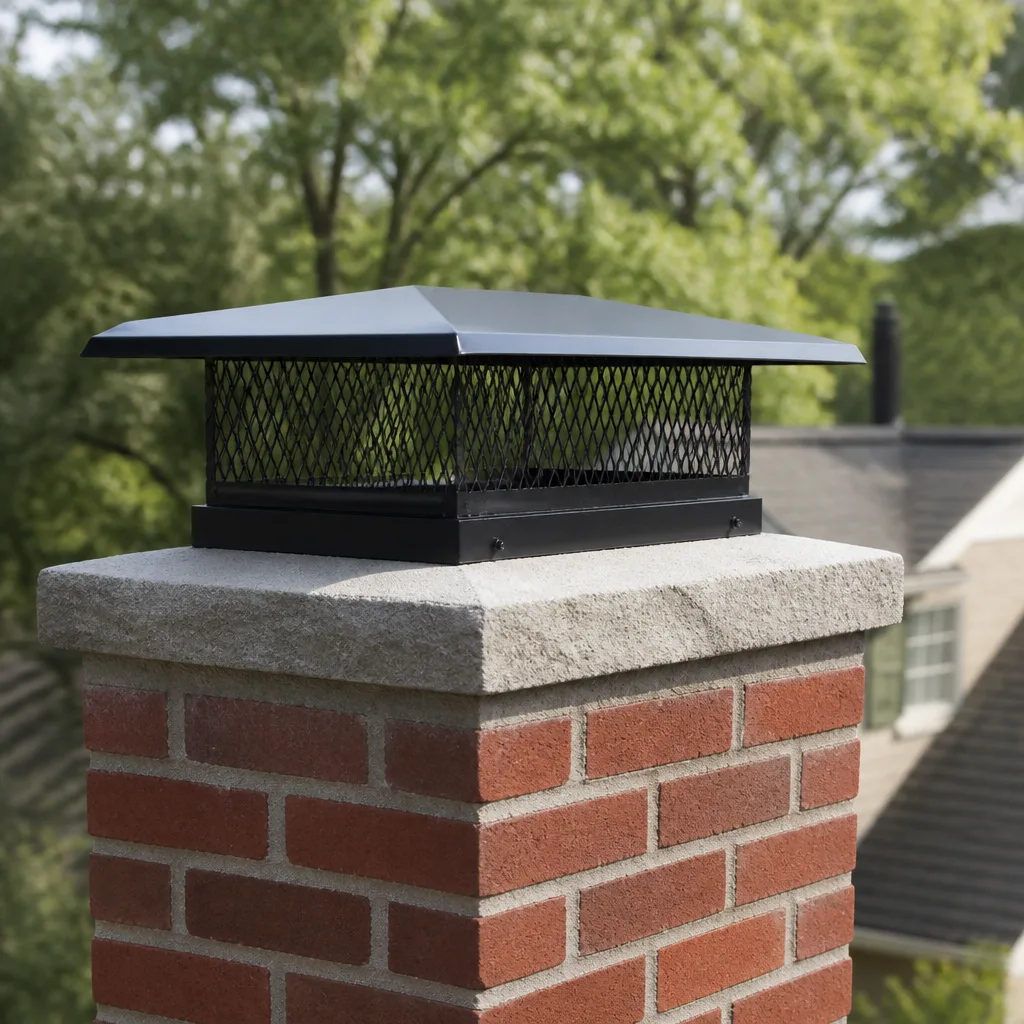
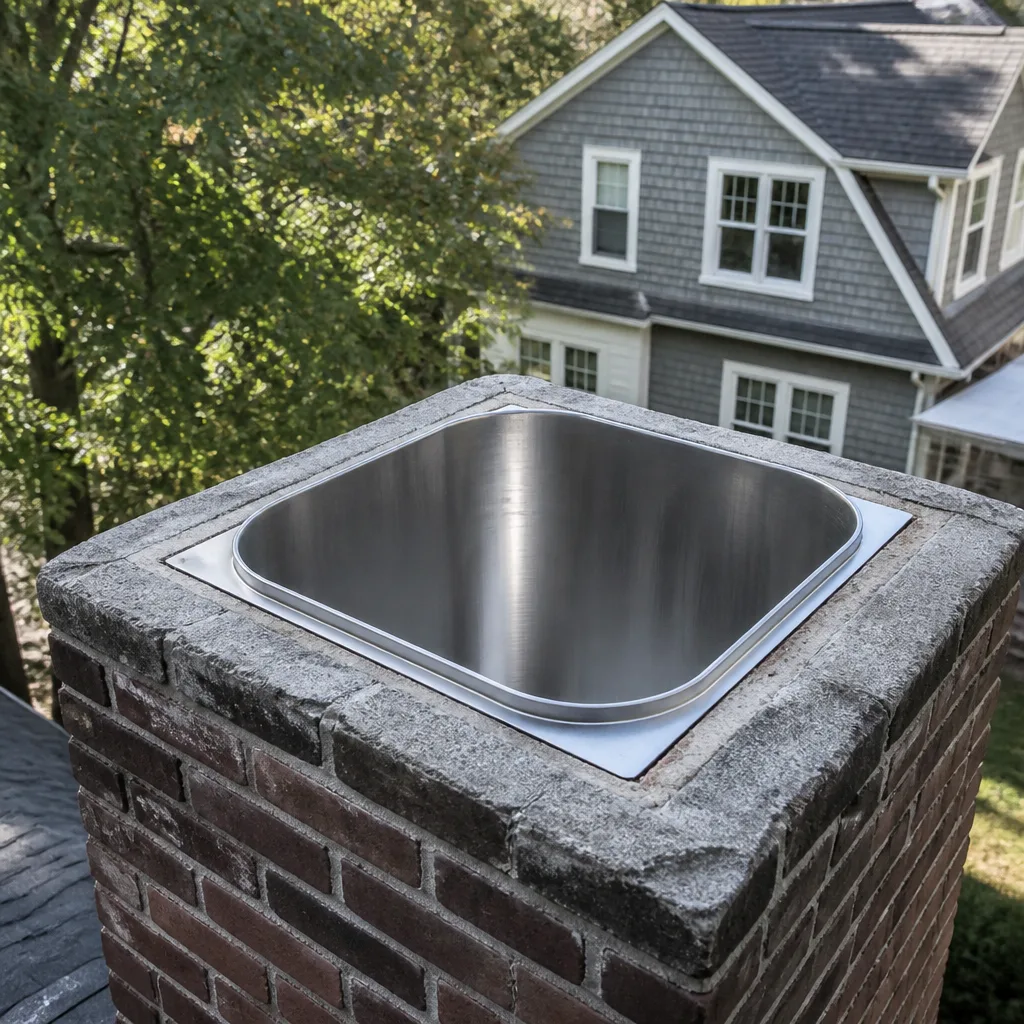
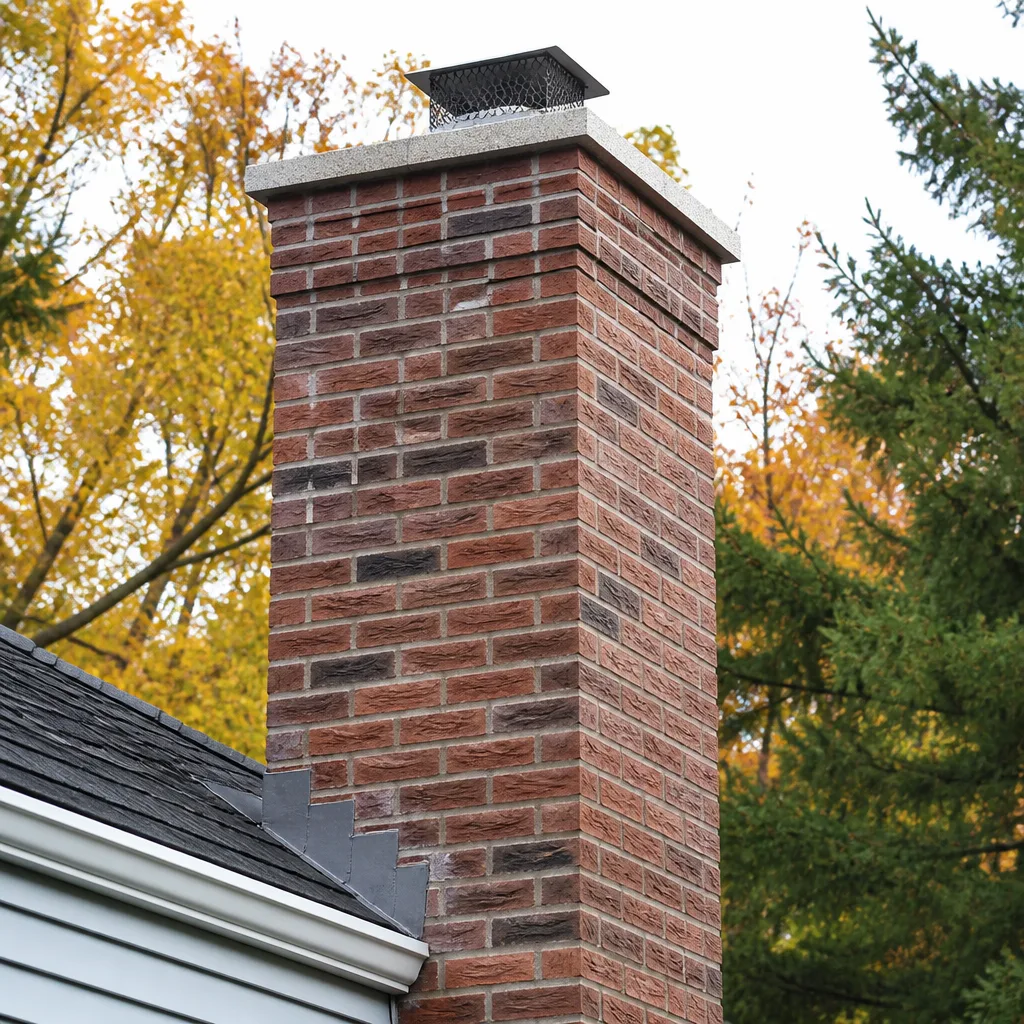
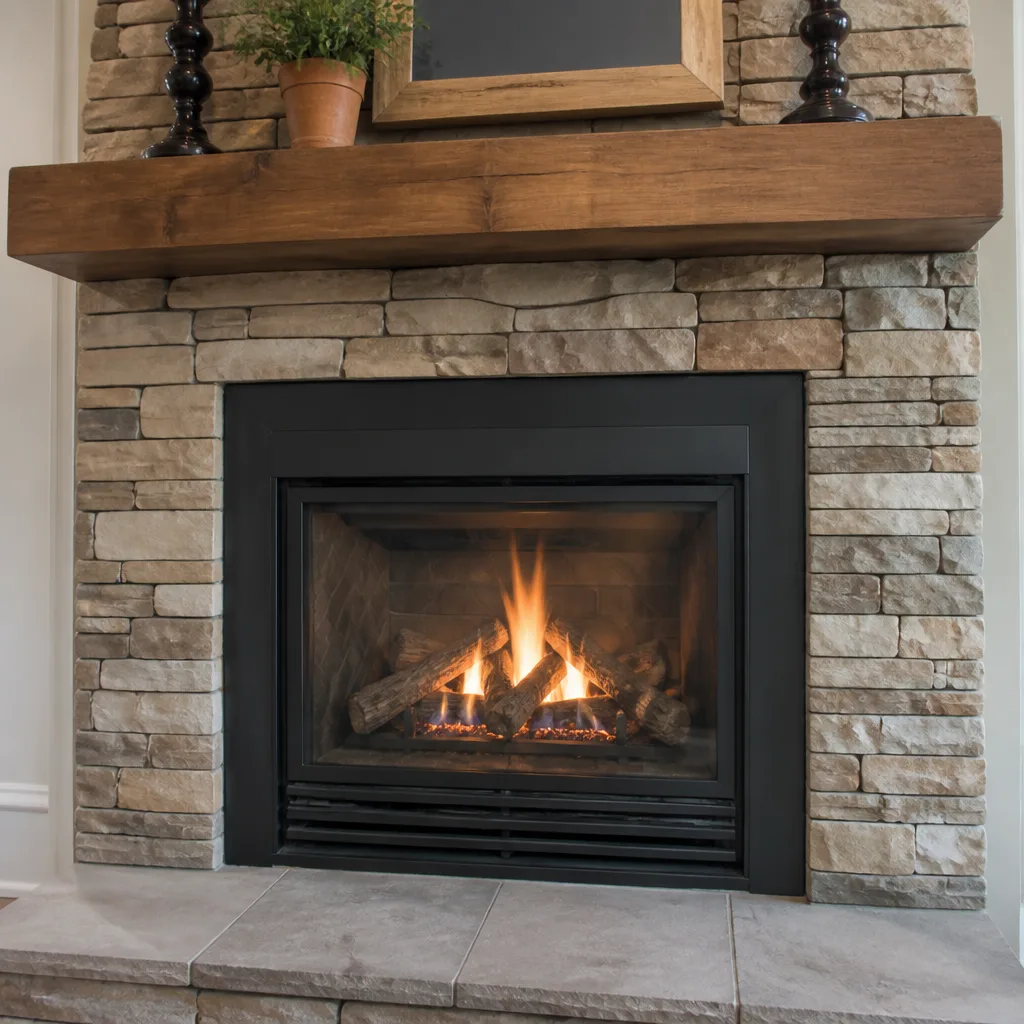
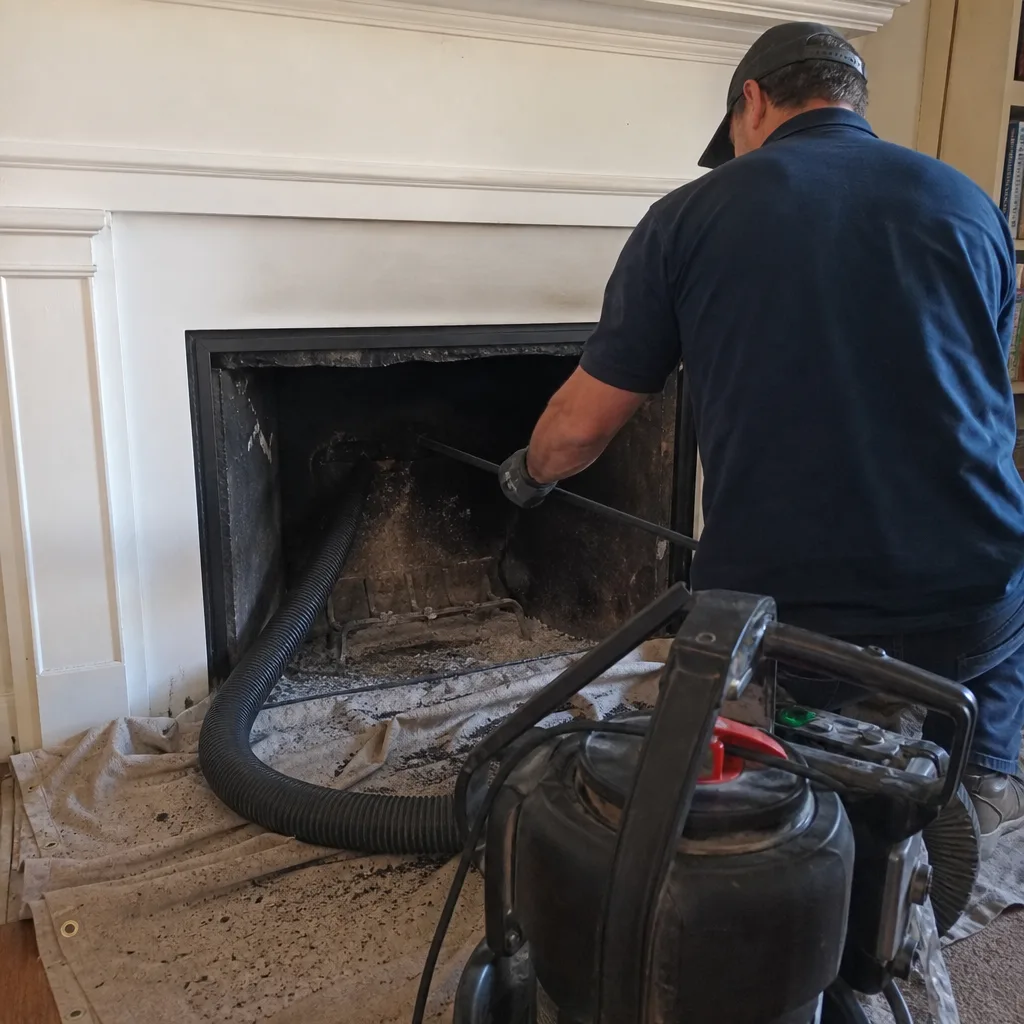 Before
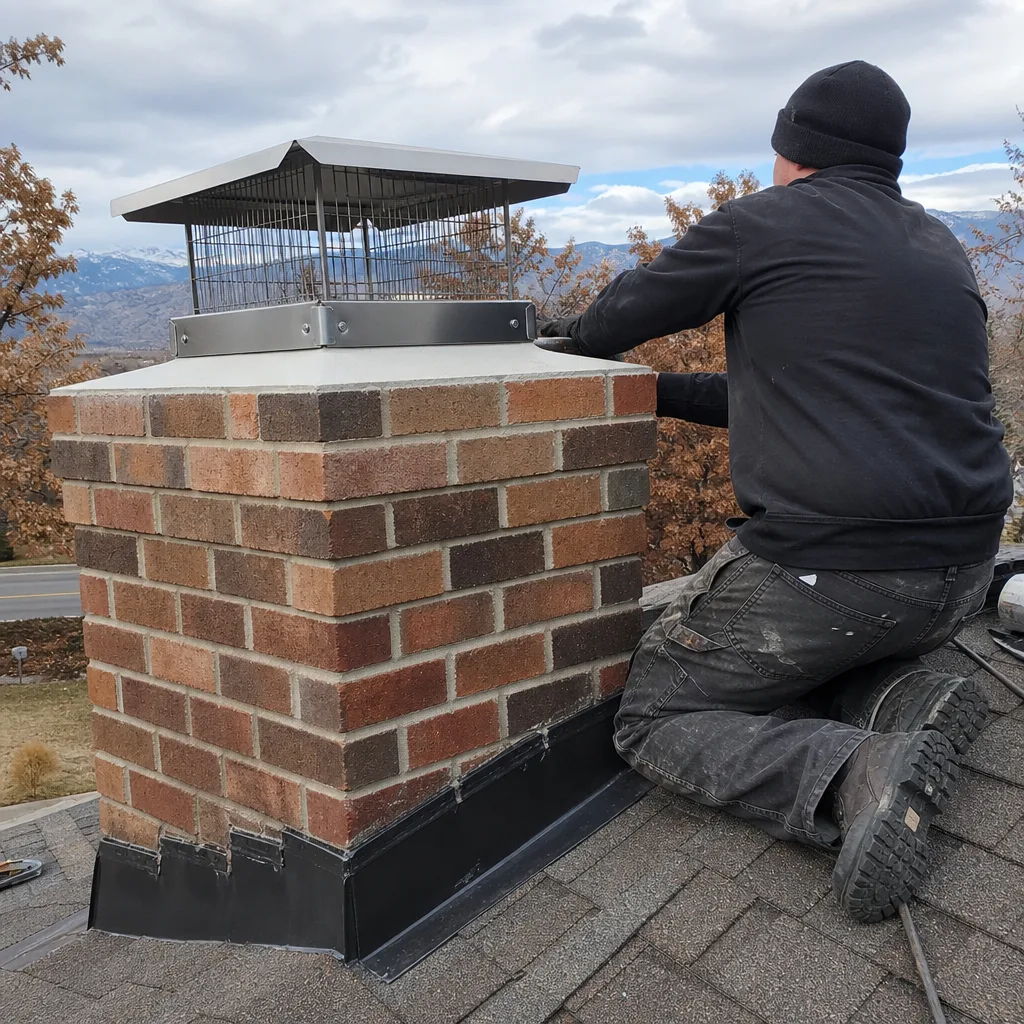 After
After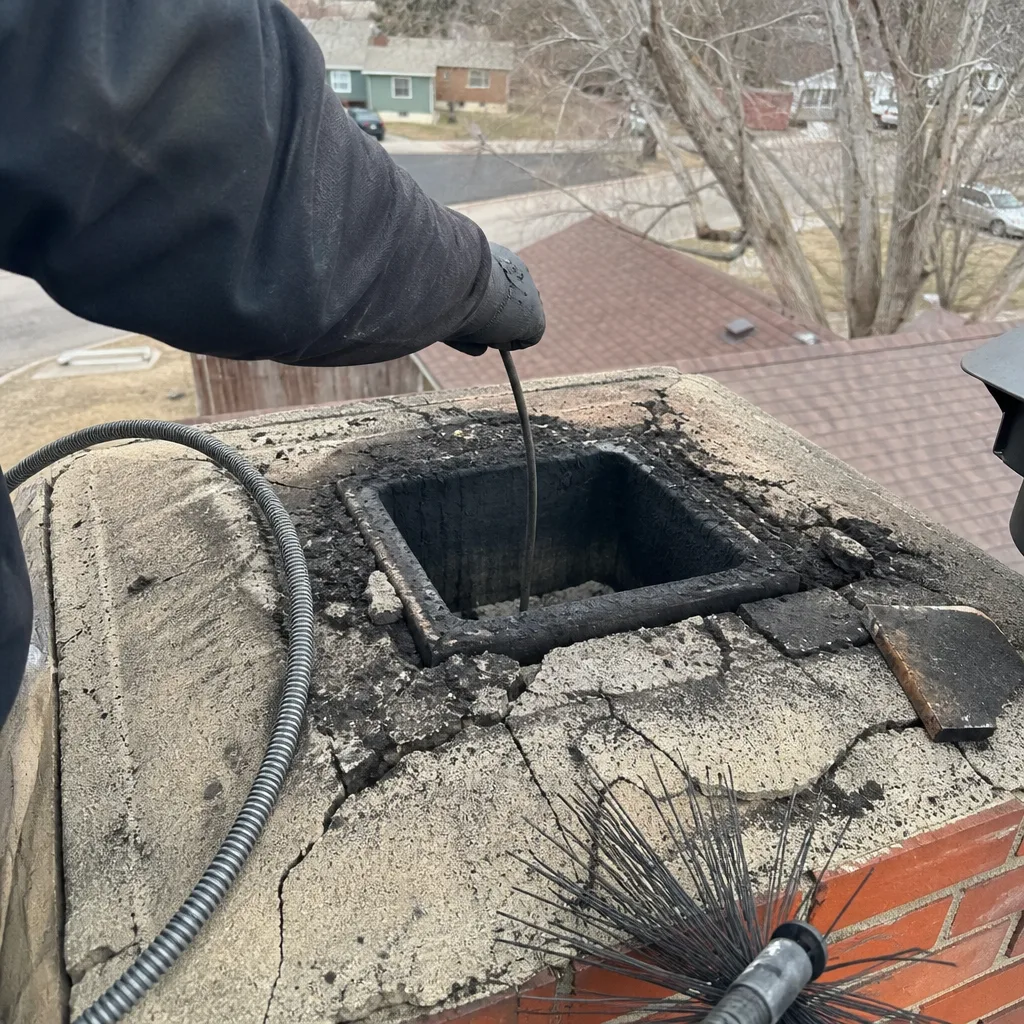 Before
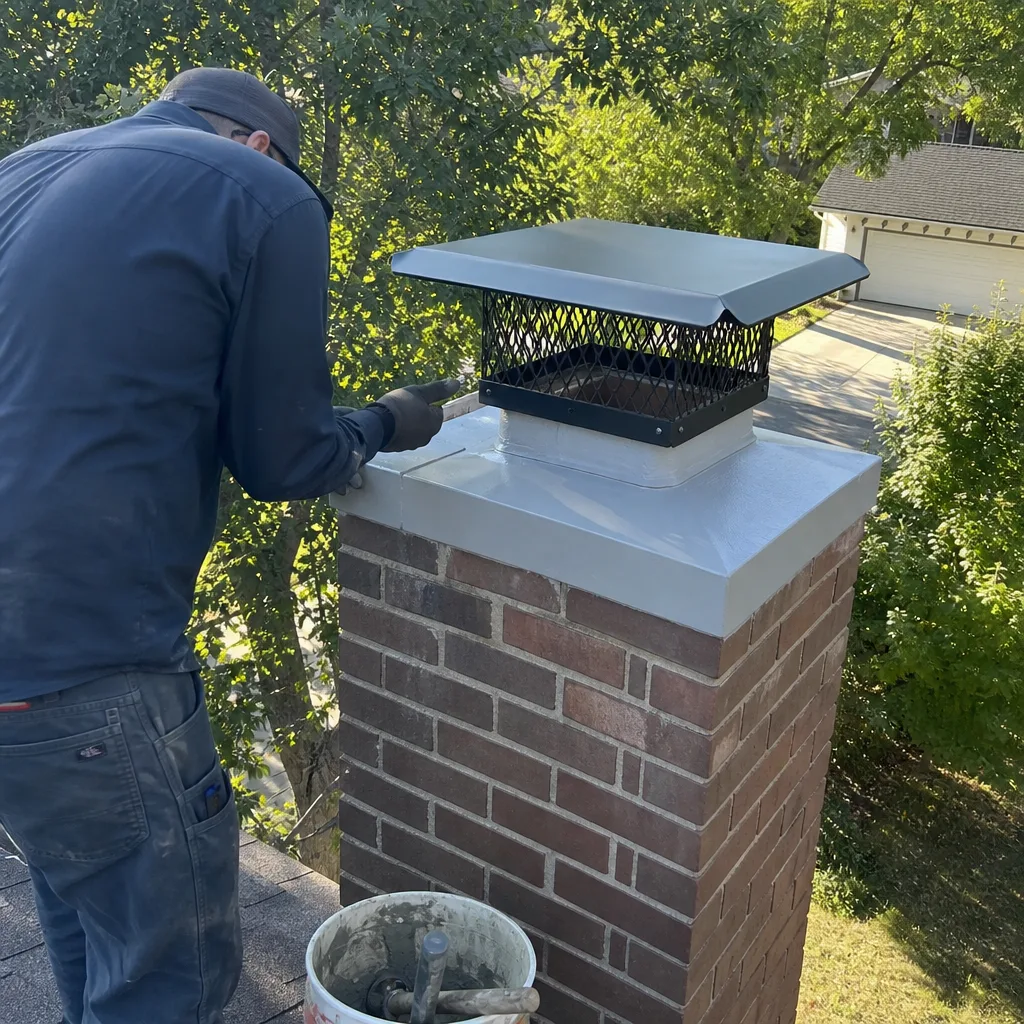 After
After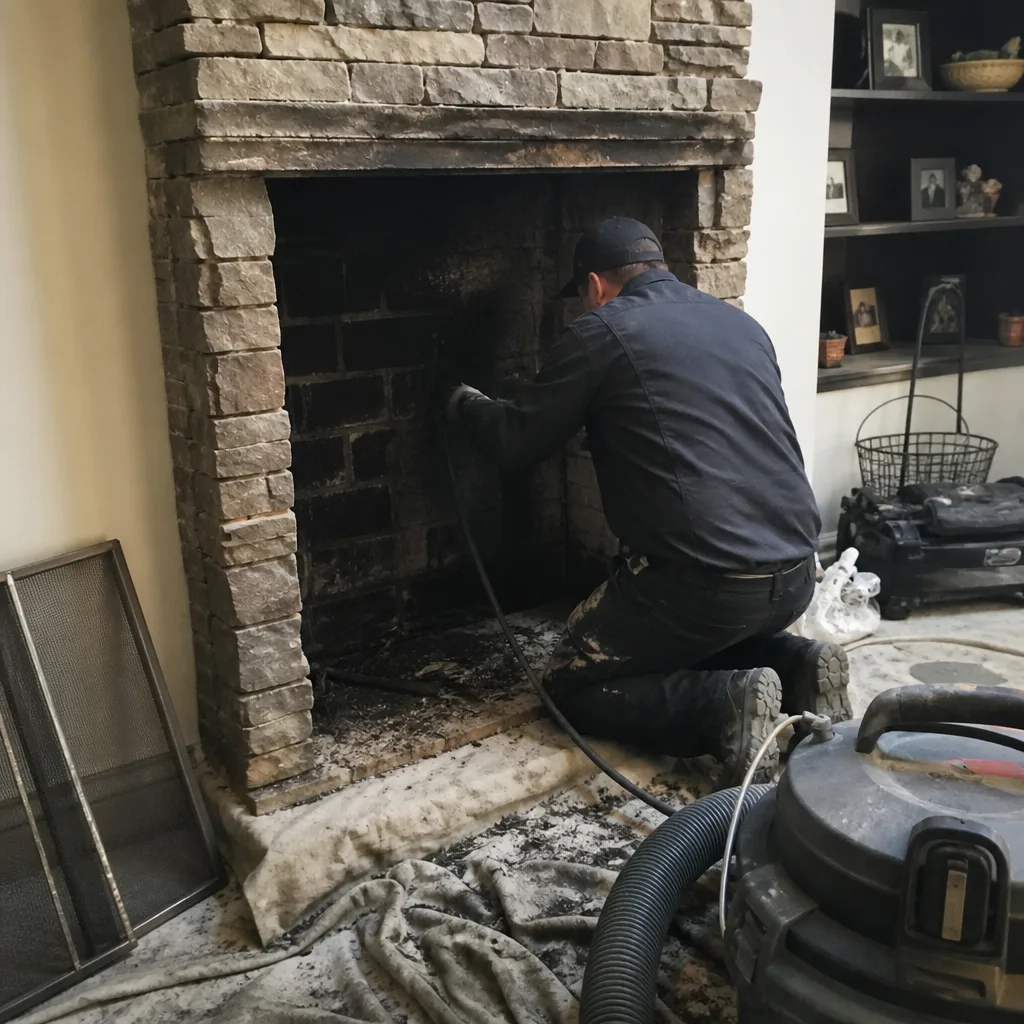 Before
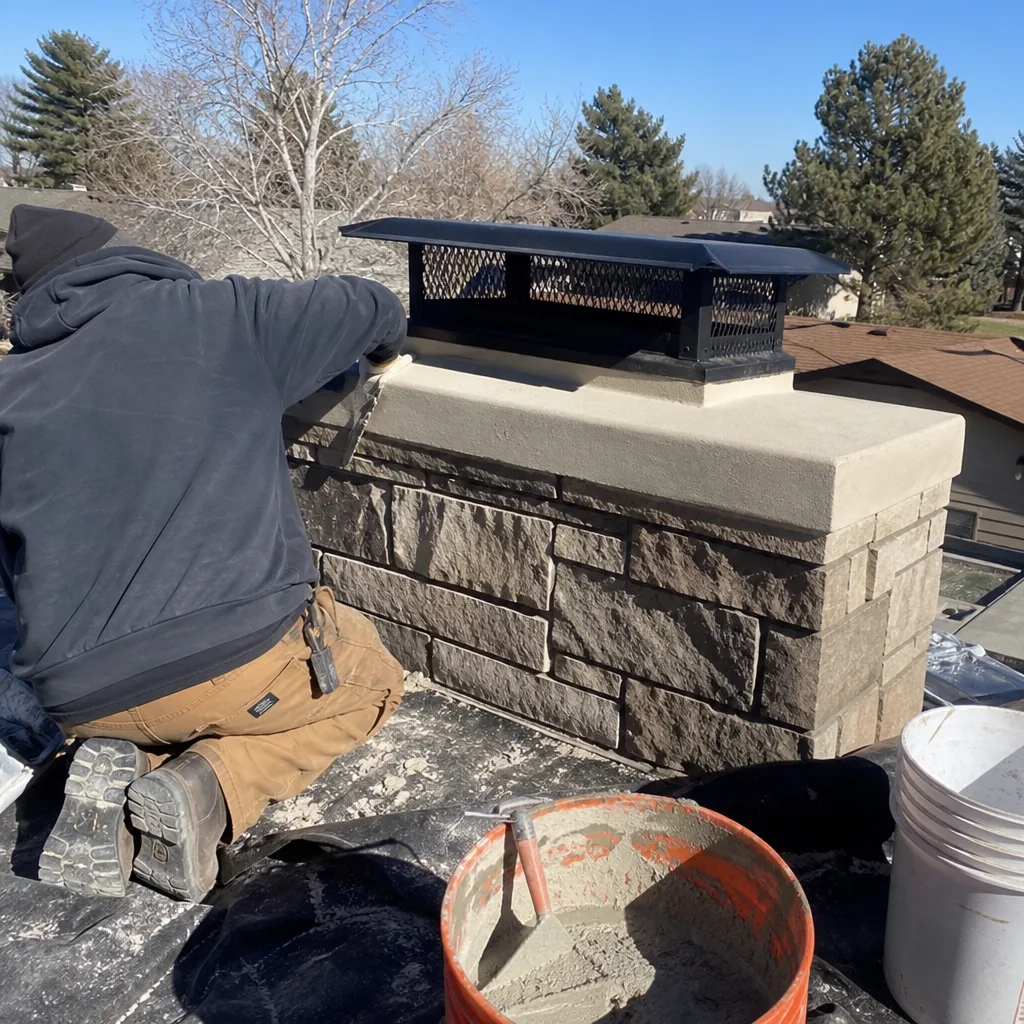 After
AfterHow Much Does Chimney Cap & Crown Cost in Littleton?
Chimney cap and crown work in Littleton, CO typically runs between $150 and $1,800, depending on whether you need a simple cap replacement or a full crown rebuild. Most Littleton homeowners pay somewhere in the $300-$750 range for a standard galvanized or stainless steel cap installation, while masonry crown repairs land between $250 and $950 for partial work and up to $1,800 or more for a full pour. Every job at Level Two Chimney Co. comes with a written price before anyone starts work – no estimates delivered after the fact, no surprises on the invoice.
Chimney Cap and Crown Cost Breakdown (2026)
Chimney Cap & Crown are two separate components that often get lumped together in conversation – understandably, since they both live at the top of your chimney. The cap sits over the flue opening and keeps rain, debris, and wildlife out. The crown is the concrete or mortar slab that covers the top of the chimney masonry around that flue opening. Below is how the pricing breaks down in the Littleton market for 2026.
| Service | Typical Price Range (Littleton, CO) | Notes |
|---|---|---|
| Single-flue galvanized steel cap (supply and install) | $150 – $275 | Budget option; shorter lifespan in Colorado’s UV and freeze-thaw climate |
| Single-flue stainless steel cap (supply and install) | $250 – $450 | Best long-term value; resists rust from wet snowmelt cycles common on the Front Range |
| Multi-flue stainless steel cap (supply and install) | $400 – $750 | Covers two or more flue tiles in one unit; common in Littleton’s older ranch-style homes |
| Copper chimney cap (supply and install) | $650 – $1,200 | Aesthetic choice for period homes; sourced through Copperfield and Famco via Haven’s buying network |
| Crown coat / elastomeric sealant application | $195 – $395 | Applied to crowns with hairline cracks but structurally sound; extends crown life 10-15 years |
| Partial crown repair (tuck-point and patch) | $250 – $650 | Suitable when cracking is isolated; less than 30% of crown surface affected |
| Full crown rebuild (remove and re-pour) | $800 – $1,800 | Required when the existing crown is spalling, badly undercut, or pitched toward rather than away from the flue |
| Crown repair + cap replacement (combined) | $650 – $1,400 | Typical combined job for a Littleton home that skipped routine maintenance for several seasons |
These ranges reflect what Level Two Chimney Co. actually quotes in Littleton. The lower end assumes straightforward access, standard flue dimensions, and no additional masonry damage below the crown line. Prices at the higher end reflect taller chimneys, difficult roof pitches found on many of Littleton’s two-story colonials near Columbine and Ken Caryl, or materials upgrades the homeowner chooses after seeing the written scope. If a competitor’s written estimate is lower than what you see here, bring it to us – our Free Second Opinion is always available at no charge.
What Affects Chimney Cap and Crown Pricing in Littleton
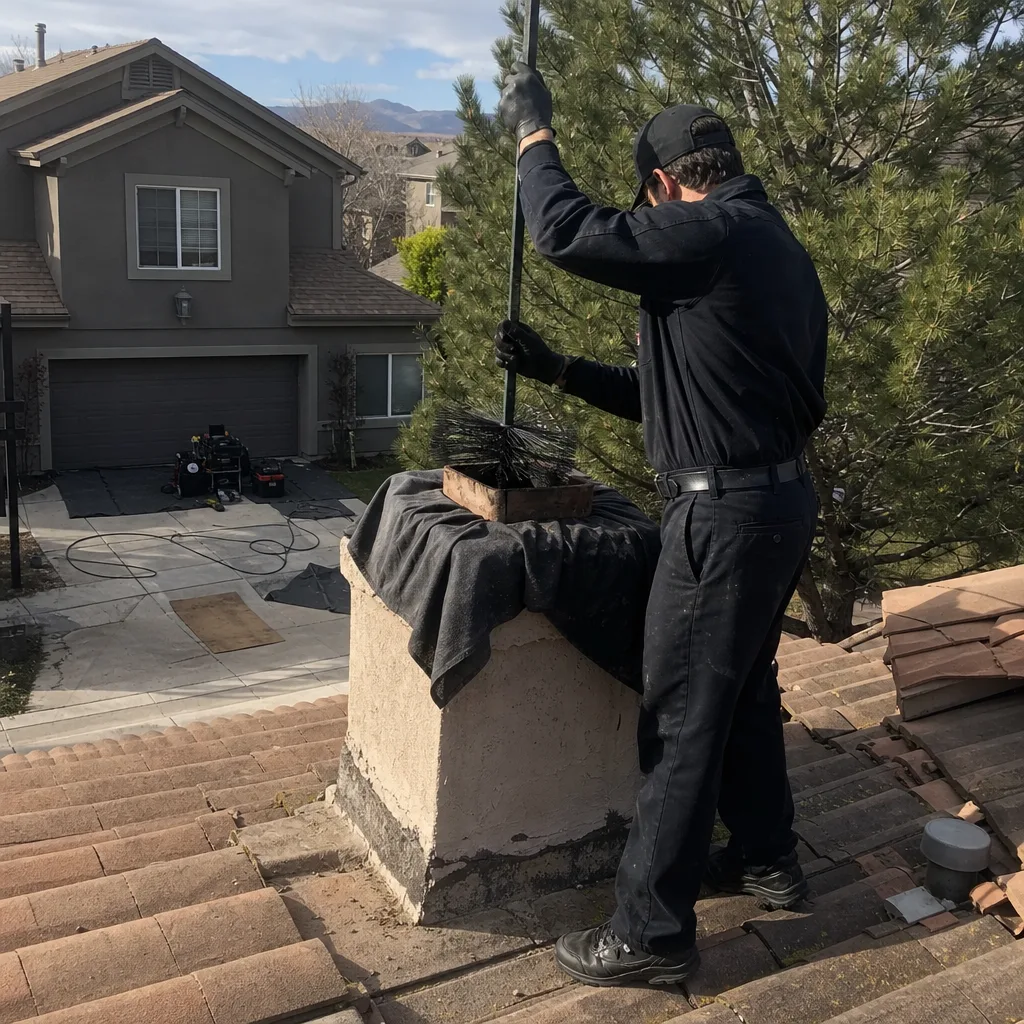
Six factors consistently move the final number up or down. Understanding them helps you read any written quote more clearly and ask the right questions before work starts.
- Cap material and size. A single-flue galvanized cap is the least expensive option, but Colorado’s intense UV exposure and the freeze-thaw cycling that hits Littleton hard from October through April will rust galvanized steel faster than it would in a milder climate. Stainless steel costs more upfront and outlasts galvanized by a decade or more here. Multi-flue caps, common on the larger brick chimneys built in the Ken Caryl Ranch and Heritage neighborhoods through the 1980s, require a custom-sized or oversized unit that adds to material cost.
- Crown condition at time of inspection. A crown with one or two hairline cracks – caught early with a Level 2 camera scan – can often be sealed with an elastomeric crown coat for $195 to $395. Wait until the surface is spalling (chunks breaking loose), undercut from freeze-thaw cycles, or pitched inward toward the flue instead of sloping away from it, and you’re looking at a full rebuild. The difference between those two scenarios is frequently $600 to $1,400.
- Roof pitch and chimney height. Many of the newer homes in SouthGlenn and Sterling Ranch have steeper roof lines. Steep-pitch work requires additional safety equipment and takes longer to set up and break down safely. Expect a modest surcharge – typically $75 to $150 – on roofs over 6:12 pitch or when a chimney extends more than five feet above the roofline. Any tech who skips the safety setup to save time is one you don’t want on your roof.
- Access and staging. Some Littleton homes have enclosed rear yards or finished landscaping that makes setting up a ladder or staging platform a careful job. This rarely adds more than $50 to $100, but it’s worth flagging when you schedule.
- Damage discovered during inspection. Our standard NFPA 211 Level 2 inspection – camera down the flue, not a flashlight from the rooftop – sometimes reveals that what looks like a crown problem is actually a sign of spalling brickwork below the crown line, or a cracked flue liner that needs addressing before sealing the top makes sense. If that happens, we document it in writing and give you a written price for the additional work before anything is done. We don’t pressure you to combine jobs.
- Materials sourcing. Level Two Chimney Co. sources caps and crown materials through Haven’s buying network – DuraFlex, Gelco, Olympia Chimney, Famco, and Copperfield are the brands in rotation. Procuring through a network buying arrangement keeps prices more honest than a single-source supplier, and it means we’re not substituting in off-brand materials without disclosure. What’s on the written scope is what goes on your chimney.
 Before
 After
AfterHow to Save on Chimney Cap and Crown Work in Littleton
There are real ways to keep this cost down, and there are false economies that end up costing more. Here’s the difference.
Get the inspection before you assume you know what you need
Homeowners who call saying “I just need a new cap” sometimes have a crown in early failure that we can seal for a few hundred dollars rather than rebuild later for a few times that. The reverse is also true: people who assume their leaking chimney needs a full crown rebuild sometimes find out that an intact crown with a missing or wrong-sized cap was the entire source of water entry. A Level 2 inspection with camera documentation shows the actual condition – that finding shapes the scope, and the written scope is what you pay for, nothing more.
Address cracks while they’re small
In Littleton, the combination of roughly 300 sunny days per year and hard freeze cycles from fall through early spring is particularly damaging to chimney crowns. UV degrades unprotected masonry, and water that enters micro-cracks freezes, expands, and widens them every cycle. A crown that had hairline cracks in 2023 can easily reach the rebuild threshold by 2026 if it was never sealed. Crown coat applied to a structurally sound surface at $195 to $395 is one of the higher-return maintenance calls in chimney work.
Combine jobs when it makes sense – but only when it makes sense
If you’re already paying for access setup on a cap replacement, it often costs very little to add an elastomeric crown coat during the same visit, since the tech is already on the roof with the materials. Ask what that combined price looks like. We’ll give you the written scope for each item separately so you can compare and decide – never packaged in a way that obscures what you’re paying for each component.
Use our Free Second Opinion
If you’ve got a written estimate from another Littleton chimney company and it seems high, bring it to us. Our Free Second Opinion means we’ll inspect the same chimney, document what we find with photos, and give you a written price to compare – at no charge. A written estimate you can’t verify isn’t worth much. Call (720) 439-4666 to set that up.
Don’t skip the written scope
This sounds obvious, but a number of Littleton homeowners we’ve spoken with paid for work they couldn’t verify was done – because they got a verbal quote and a verbal description of work completed. Under Haven Standard Clause 1, every Level Two job starts with a written price, written scope, and written warranty. Under Clause 4, you get a documented photo record when it’s done. That documentation matters when you’re selling the house, when an insurer asks questions, or when something doesn’t look right a year later and you want to know exactly what was done.
What a Level Two Cap and Crown Job Actually Looks Like
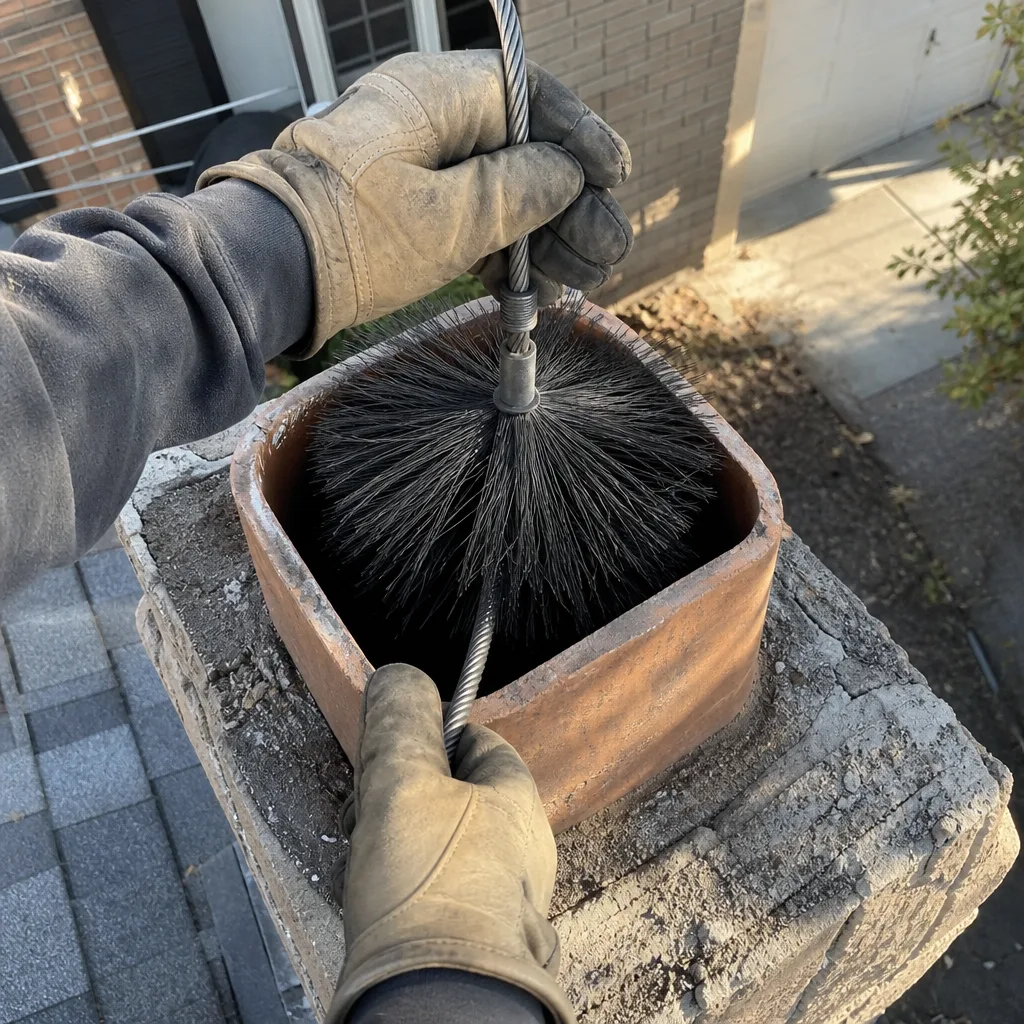
We’ve done chimney inspections and cleanings across the metro since 2009 – more than 38,000 jobs, every one with a written price before work started and a photo record at completion. Here’s what cap and crown work looks like when it’s done the way it should be.
Step 1: The Level 2 camera inspection
Before we quote any crown or cap work, a camera goes down the flue. We’re looking at the full picture – liner condition, smoke chamber, firebox, and the crown and cap at the top. This isn’t an upsell; it’s how you avoid fixing the top of a chimney while missing a cracked liner that causes the same water damage from the inside. The camera footage is documented and included in your visit record under Clause 4 of the Haven Standard.
Step 2: Written price, written scope, written warranty
Before anyone touches a tool, you receive a written price for the specific work your chimney needs. Not a range. A number. The scope describes exactly what materials are going on – cap brand, dimensions, cap style, crown treatment type – and the warranty terms are in writing on the same document. That’s Haven Standard Clause 1: Have it in writing.
Step 3: Work performed by a background-checked, uniformed tech
The tech assigned to your job is named in advance and you get a text when they’re on the way. They arrive in uniform with our license information verifiable on the page. In Littleton, we typically schedule crown and cap jobs within a few business days of the inspection, weather permitting – late-season scheduling before the first hard freeze in October is the busiest window, so earlier in the fall is worth considering.
Step 4: Documented photo record and the 365-Day Done Right Promise
When work is complete, you receive a photo record of the finished installation – cap seated and secured, crown sealed or rebuilt, drainage profile confirmed sloping away from the flue. That record goes into your chimney’s documented history. And the 365-Day Done Right Promise means that if something isn’t right within a year of the job, we come back and make it right. That’s not a marketing line; it’s stamped on every job under the Haven Standard.
Littleton-Specific Notes on Cap and Crown Wear
Littleton sits at roughly 5,400 feet elevation, which puts it at the base of the Front Range foothills. That position creates a particular combination of stressors for chimney crowns that’s worth naming directly, because it affects how quickly things degrade and how you should prioritize repairs.
The UV index at this elevation runs meaningfully higher than at sea-level cities, which accelerates surface degradation on unprotected masonry. Crowns that get regular elastomeric sealing fare significantly better over time than those left untreated, even when the masonry itself is good quality. In neighborhoods like Heritage Hills and the older sections of South Littleton near Bemis Park, we see crowns on 1970s and 1980s-era brick chimneys that have gone decades without sealing and are now at or past the rebuild threshold.
The freeze-thaw cycle here is also longer and more variable than in many Colorado cities further from the mountains. Warm afternoons in March push temps above freezing while nights still drop well below. That daily cycling through the freeze-thaw point in late winter is harder on crown masonry than sustained cold, because it allows water to enter, freeze, expand, thaw, and enter deeper on a near-daily basis for weeks at a time.
Wind is another factor. Littleton’s position relative to the foothills means sustained westerly winds that push rain and snow horizontally against the chimney top. Caps that don’t have adequate clearance between the mesh bottom and the flue tile top can get blocked with debris or ice faster here than on a calmer exposure. When we spec a cap for a Littleton chimney, we factor that in – the clearance dimension matters.
For homeowners in the Sterling Ranch development further southwest, newer construction means newer crowns, but the elevation and exposure are similar. New doesn’t mean immune. We see crowns on five-year-old chimneys in Sterling Ranch that show early craze cracking because the crown was poured thin or without proper drip-edge overhand at construction.
Cap vs. Crown: What’s the Difference and Why Does It Matter for Pricing?
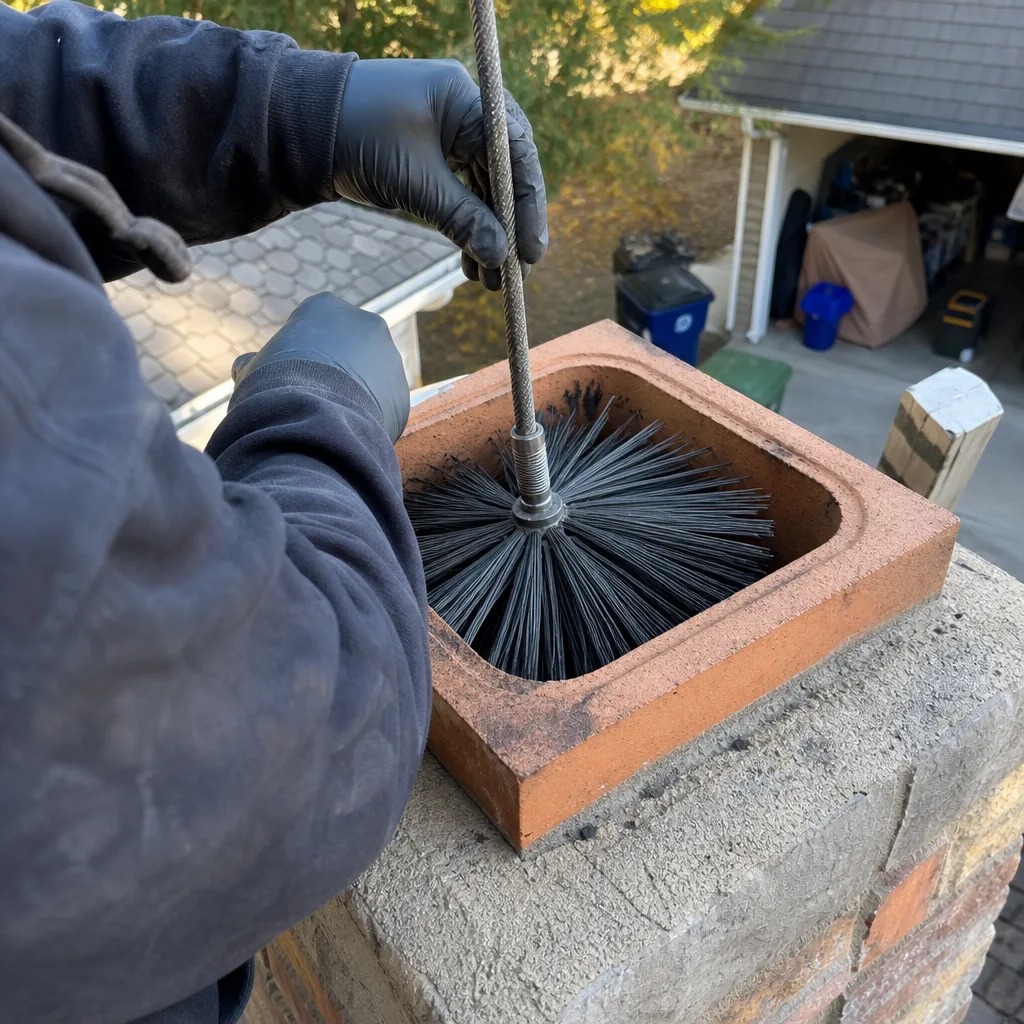
These two terms get used interchangeably sometimes, which leads to confusion on bids. Here’s the plain version.
The chimney cap is the metal cover – usually stainless steel or galvanized steel, sometimes copper – that sits directly over the flue opening. Its job is to keep rain, birds, squirrels, and debris from entering the flue. It also has a mesh cage that acts as a spark arrestor. When a cap is missing, damaged, or the wrong size for the flue tile, rain pours directly into the flue liner. In a clay tile liner, that moisture accelerates spalling of the tiles. In a metal liner, it can accelerate corrosion. A missing cap is the single most common preventable source of water damage in Littleton chimneys.
The chimney crown is the concrete or mortar slab that covers the top course of the chimney’s masonry, surrounding the flue. A properly built crown slopes slightly downward from the flue toward the outer edge so water runs off rather than pooling. It also overhangs the brick face slightly so runoff drips clear rather than running down the masonry face – similar to how a roof overhang protects a wall. When the crown is cracked, flat, or pitched inward, water sits on the masonry surface and infiltrates the brick joints. That leads to spalling brick, damaged mortar, and eventually structural deterioration below the roofline.
Both need to be functional. A perfect cap on a failed crown still lets water infiltrate through the crown surface. A perfect crown with no cap still lets rain pour down the flue. When we inspect, we check both and report on both – and if only one needs work, that’s what the written scope covers. You won’t find us recommending crown work when a cap is all that’s needed.
For full details on what the service covers and how we approach the job, see our Chimney Cap & Crown in Littleton service page.
FAQs – Chimney Cap and Crown Cost in Littleton
How much does a chimney cap cost in Littleton, CO?
A single-flue stainless steel chimney cap in Littleton typically costs $250 to $450 installed. Galvanized caps run lower at $150 to $275, but don’t hold up as well under Littleton’s UV exposure and wet snow cycles. A multi-flue cap covering two or more openings runs $400 to $750, and copper caps for architectural applications can reach $650 to $1,200 depending on size and fabrication. Call (720) 439-4666 for a written quote on your specific flue – estimates are free and delivered in writing before any work begins.
How much does chimney crown repair cost in Littleton?
Crown repair in Littleton ranges from $195 for an elastomeric sealant coat on a structurally sound but cracked crown, up to $1,800 for a full remove-and-rebuild when the crown is spalling, badly undercut, or structurally failed. Partial repairs – patching isolated cracks in a crown that’s otherwise solid – typically run $250 to $650. The inspection finding determines which category your crown falls into. A camera-scan inspection gives a clear picture of condition before any scope is written. Call (720) 439-4666 to schedule.
Is it cheaper to repair or replace a chimney crown?
Repair is cheaper when the crown has hairline or moderate cracking but no structural failure – typically $195 to $650 versus $800 to $1,800 for a full rebuild. But the wrong call costs more in the long run. A crown coat applied to a crown that’s already spalling or structurally unsound just delays the rebuild by a season and adds cost to what will still be required. Our Level 2 inspection documents the crown condition with photos so you can see exactly what state it’s in before the scope is written. There’s no incentive on our end to recommend a rebuild if a repair will hold.
How long does a chimney cap last in Colorado?
A stainless steel chimney cap typically lasts 20 to 30 years in the Littleton climate when properly sized and installed. Galvanized steel caps run 5 to 15 years here, shortened by the combination of UV exposure at elevation and moisture from wet snowmelt. Copper caps outlast both, often exceeding 30 years. We document cap installation date and condition in the photo record on every visit, so you have a reference point for future inspections rather than guessing when it was last touched.
Can you do a chimney cap and crown repair on the same day in Littleton?
In most cases, yes – cap replacement and crown coat application are both same-day jobs, typically completed in two to four hours depending on chimney height and access. A full crown rebuild requires the new pour to cure, so it’s usually a two-visit job: demolition and form-setting on day one, pour on day two, inspection after curing. We schedule based on weather because crown work requires above-freezing temperatures and dry conditions – something that limits windows in Littleton from late November through March. If you’re reading this in spring or fall, that’s the best window to get ahead of the season. Call (720) 439-4666 and we’ll tell you the current schedule availability.
Do I need a permit for chimney cap or crown work in Littleton?
Cap replacement is typically a like-for-like maintenance item that does not require a building permit in Littleton. Crown repairs and rebuilds are generally treated the same way – they are maintenance and restoration of existing masonry rather than new construction. That said, if the work is being done in conjunction with a full chimney rebuild or significant structural masonry repair, the broader project may require a permit through the City of Littleton’s Building Division. We handle that conversation during the written scope phase so there are no surprises after work begins.
A Few Things Worth Knowing Before You Call Anyone
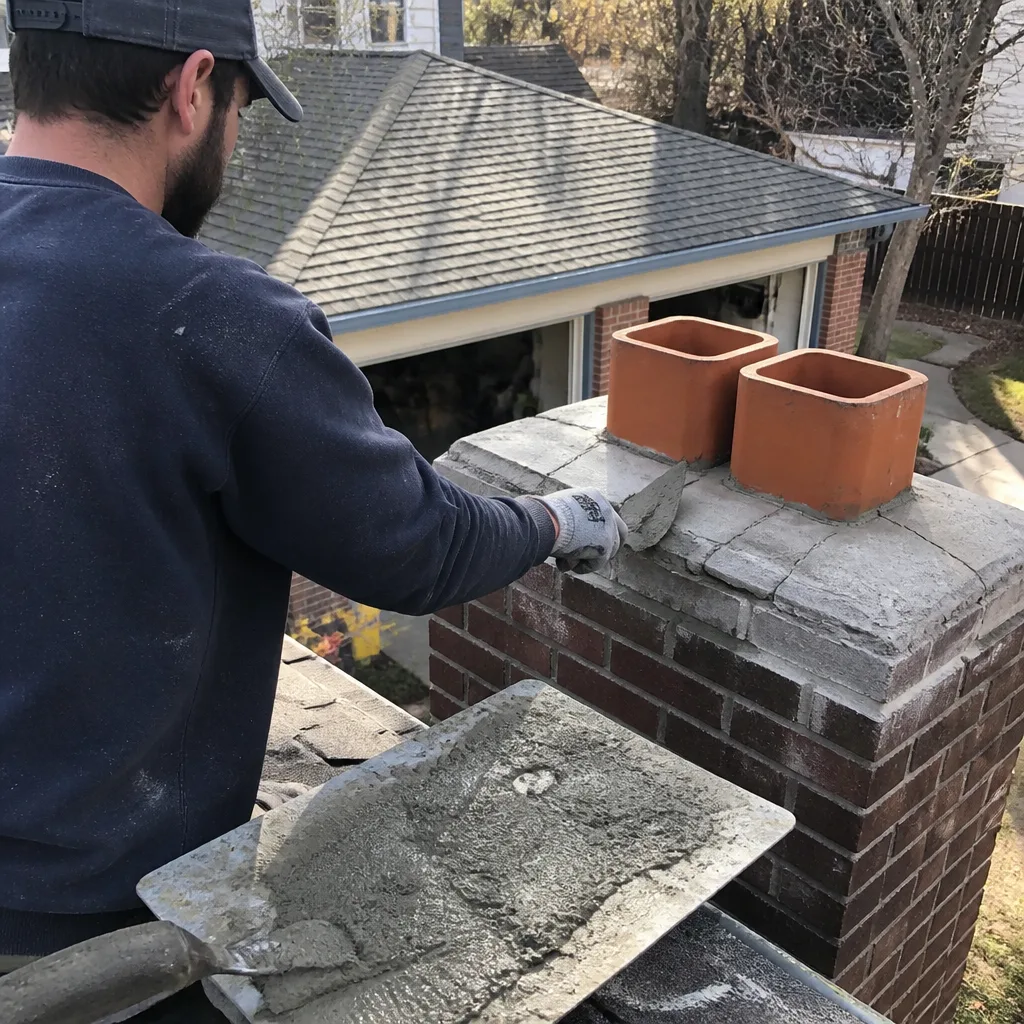
Chimney cap and crown pricing varies widely in the Littleton market, and not all quotes cover the same thing. Some companies will quote “crown sealing” and apply a standard masonry sealant rather than an elastomeric crown coat – they’re not the same product, and standard sealant isn’t flexible enough to bridge active cracks through freeze-thaw cycles. Ask specifically what product is going on.
Cap sizing matters more than most homeowners realize. A cap sized for a 13×13 clay tile will fit poorly or not at all on a 13×17 flue, and an undersized cap can actually concentrate downdraft into the flue rather than deflecting it. When we replace a cap, we measure the flue tile at the termination – not assume a standard size.
If you’ve received a written estimate from another company in Littleton, bring it to us. Corrine Halstead leads the Level Two Chimney Co. team, and a Free Second Opinion is something she’s made standard practice from the start – because a written estimate you can compare is more useful than reassurance. We’ll document what we find and give you a written number to set beside the one you have.
Level Two Chimney Co. has documented more than 38,000 chimney jobs since 2009 – caps, crowns, liners, rebuilds, and sweeps. Every one came with a written price before work started and a photo record when it was done. Corrine built the practice on that standard because it’s the only way to stand behind the work. The 365-Day Done Right Promise isn’t a footnote – it’s on every job document.
Key Takeaways
- Chimney cap installation in Littleton runs $150 to $1,200 depending on material and flue count; stainless steel single-flue caps are the most common job at $250 to $450 installed.
- Crown repair ranges from $195 for elastomeric sealing to $1,800 for a full rebuild; early sealing is significantly cheaper than waiting for structural failure.
- Littleton’s elevation, UV index, and freeze-thaw cycle accelerate crown wear – crowns without regular sealing degrade faster here than in lower-elevation Colorado cities.
- Every Level Two job includes a written price before work starts, a documented photo record at completion, and the 365-Day Done Right Promise.
- A Free Second Opinion on any written estimate is available – bring the competitor’s quote and we’ll document the chimney and give you a written number to compare.
- Cap and crown are two separate components with separate failure modes; fixing one without assessing the other is incomplete work.
- Live phone support is available 24/7 at (720) 439-4666.
Get a Written Cap and Crown Price for Your Littleton Chimney
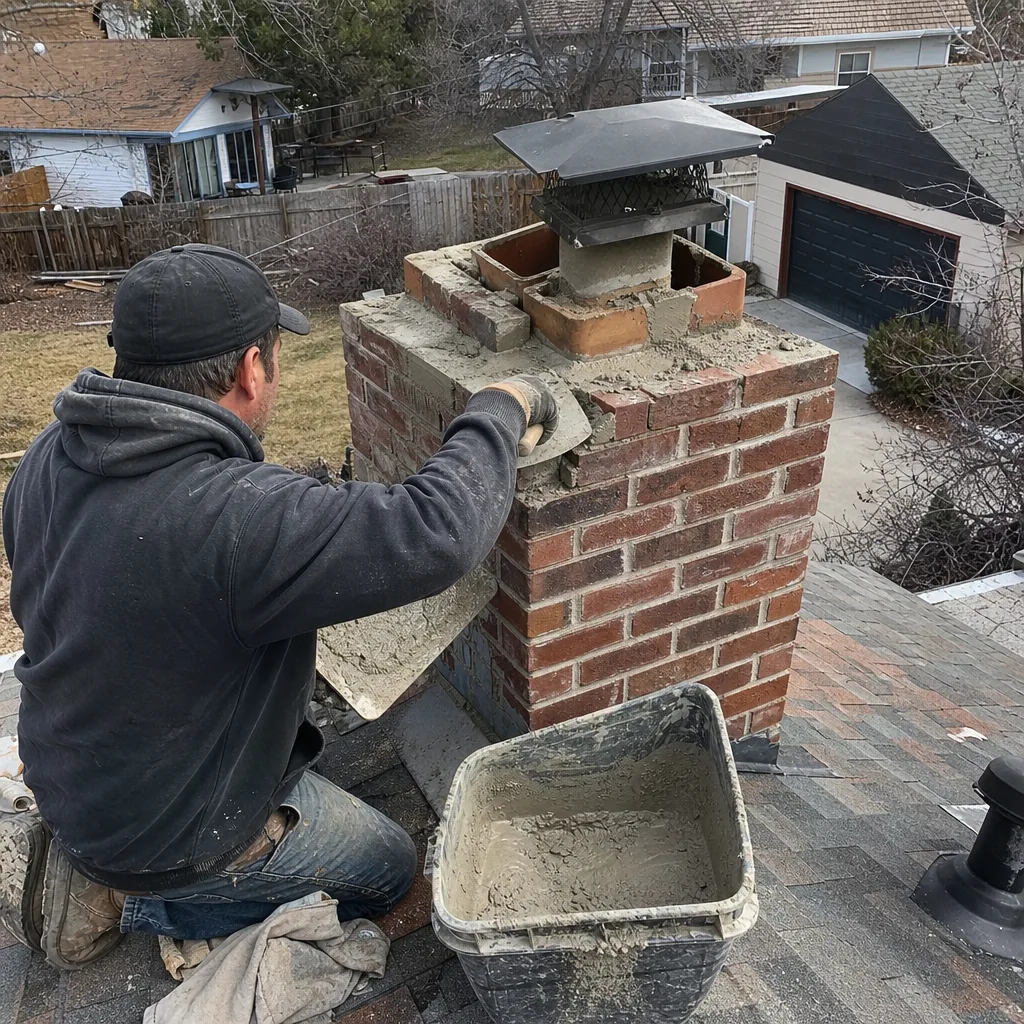
If you want to know exactly what your chimney cap or crown work will cost in Littleton – a specific number, on paper, before anyone starts – call Level Two Chimney Co. at (720) 439-4666. We’ll schedule the Level 2 camera inspection, document what we find with photos, and give you a written scope and price before any work begins. No verbal estimates, no after-the-fact invoices. That’s been the standard since 2009, and it doesn’t change based on job size. Estimates are free. The written price is guaranteed before the first tool comes out.
Pricing reflects the Littleton market as of 2026. Level Two Chimney Littleton offers free estimates – call (720) 439-4666.
Written by Corrine Halstead, Owner at Level Two Chimney Co., serving Littleton, CO since 2009.
What Our Customers Say
"They told me the flue was fine and I did not need a liner. Charged me for the inspection and nothing else. That is why I have called them twice since."
- Hal M."Clean, careful, put down sheeting, and the fireplace works properly for the first time since we moved in."
- Yvette S."Cap and crown replaced after water was getting in. Price was quoted in writing, and they showed me the mortar failure first."
- Neil O.